
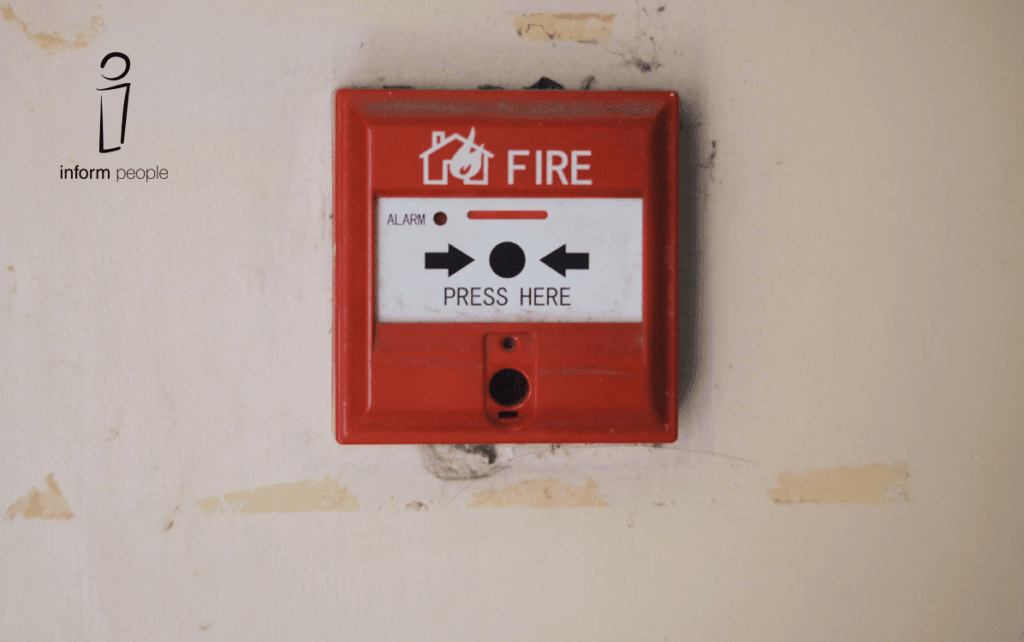
Fire safety rules and regulations are crucial for protecting people who work in any organisation. The Regulatory Reform (Fire Safety) Order 2005 requires every non-domestic premises’ Responsible Person (RP) to conduct a fire risk assessment, including steps to minimise or eliminate the danger of fire and to identify those at risk.
These standards and regulations are put in place to ensure that the person responsible for the health and safety in a building is informed of the potential hazards, the safety measures they are responsible for implementing, and the consequences if they fall short of these standards.
With approximately 20,000 commercial fires in the UK each year, these are binding obligations that should be taken seriously. It is advised that the “responsible person” hire a competent fire safety company to assist them in meeting their company’s needs.
Guide to Fire Safety Order Regulations in the UK
The Fire Safety Act amended the Regulatory Reform (Fire Safety) Order 2005. It is critical for every building owner or responsible person to be aware of these revisions and have a clear grasp of what is contained in the Fire Safety Act.
The Act focuses on fire risk assessments. The Act states that responsible persons (RPs) must manage and limit the risk of fire for the building’s structure and exterior walls, including balconies, cladding, and windows, as well as entrance doors to individual flats that open into public facilities.
It’s important to remember that this applies to all multi-occupied structures and isn’t affected by the building’s height. We suggest reviewing your existing fire risk assessment document and amending it as needed in light of these changes.
The following are the complete fire safety legislations:
- England – Fire Safety (England) Regulations 2022
- Scotland – Fire (Scotland) Act 2005
- Wales – Fire Safety Act 2021
UK fire safety legislation is simplified.
1. Fire Risk Assessment
A Fire Risk Assessment is required for all enterprises. This is the foundation of your business’s fire protection and, together with your Fire Safety Logbook, is the first thing a fire authority inspecting officer will look for when they visit your premises.
You are not required to engage a professional fire risk assessor if you do not like to, but anybody who does a fire risk assessment in your organisation must be confident in their ability to correctly identify the possible sources of fire in their operation.
- Identify who is at risk.
- Evaluate the effectiveness of existing fire safety measures, such as fire alarm systems and escape routes.
- Evaluate the company’s ongoing fire safety management, such as fire drills and employee training.
- Create a fire safety action plan if modifications are required.
- Keep track of any significant findings.
- If an action plan is required, carry it out.
- Keep the fire risk assessment up to date on a regular basis.
2. Fire Extinguishers
According to UK fire safety regulations, you must supply “appropriate fire-fighting equipment.” Portable fire extinguishers are often required, although some higher-risk enterprises may additionally need hose reels or sprinklers. A restaurant, or one that has to keep chemicals or dangerous items, is an example of a higher-risk business.
Your fire extinguishers must be appropriate for the business and area they are in.
- They should be kept in excellent working condition.
- Perform a yearly maintenance test.
- Have them maintained by a trained individual.
- The person checking them is required to be certified following industry standards.
3. Fire Safety Signs
Company owners often ignore fire safety signs, although all organisations will require at least two signs (a Fire Action Notice and an Extinguisher ID sign), most likely more, to be legally compliant.
The following is a list of the many kinds of fire safety signs and when they should be used:
- Fire Action Notice – outlines what to do in the event of a fire and is required for all buildings.
- Fire Extinguisher Identification Sign - It’s mandatory to describe and locate each kind of extinguisher.
- Fire exit signs - indicating how to escape in the event of a fire. All but the simplest and most basic qualities need it.
- Fire alarm call point signs - specify where the fire alarm should be activated. If you have an alarm, this is a must.
- Other fire equipment signs – If you have a hose reel or a dry riser, you must note their location.
- Warning & Prohibition signs - Draws attention to the hazard. If there is an increased danger of fire on your site, this is required.
4. Fire Alarm Systems
All other companies must have a suitable fire detection system, according to UK fire safety regulations. This implies that you will need either a manual or an automated system.
- An automated system is required if it is likely that a fire would go uncontrolled or will obstruct evacuation routes.
- The alert must be heard by everyone in the building.
- Every exit on every level must have an alarm call point.
Furthermore, your fire detection system must be kept in excellent working condition.
- You must test your fire alarm once a week.
- Your fire alarm must be serviced at least once every six months.
- The person doing the testing and maintenance must be trained.
- The person needs to be certified and authorised to follow industry standards.
5. Emergency Lighting
According to UK fire regulations, emergency lighting is necessary for buildings to provide visibility if conventional lighting fails during a fire.
Emergency lighting serves three main purposes.
- Escape Route Lighting: lights evacuation pathways and assists people in locating fire-fighting equipment in the event of a fire.
- Open Area Lighting: commonly known as ‘Panic Lighting.’ In a fire, it keeps public areas lighted to minimise panic.
- High-Risk Task Area Lighting: provides brightness to potentially risky operations in the case of a fire.
6. Fire Safety Training
UK fire safety regulation demands fire safety training: refresher training should be conducted regularly, often yearly.
- If there are any modifications, such as building renovations, fire safety training must be updated.
- You must conduct frequent fire drills.
- You must appoint people, known as Fire Marshals or Wardens, to perform the following in the event of an alarm:
– When necessary, use fire extinguishers.
– Make a call to the emergency services.
– Help with the evacuation.
Your fire safety risk assessment is not a one-time process and should be assessed regularly. If the assessment’s conclusions are no longer valid, if there have been substantial changes to the buildings, or if the organisation of the work conducted has influenced the fire risk or fire safety measures, the assessment should be reassessed.
And how?
We understand that staying on top of compliance is difficult. The integrated compliance module in Inform People allows you to manage numerous assets from anywhere and on any device, enabling you to maintain and show compliance. Our health and safety auditing software enable you to execute inspection tests, highlight non-compliances, and report them inside the app for a comprehensive audit trail and easy action management.
Contact us now to see how Inform People’s compliance and performance management software may help you save time and optimise your compliance procedures for a more effective work environment.