
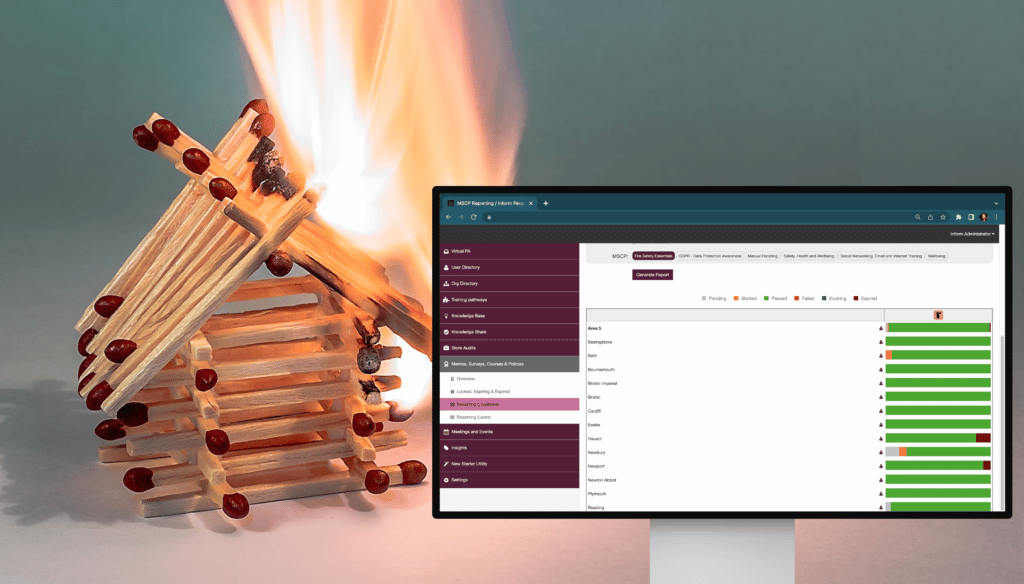
Workplace fires can be disastrous for any business, regardless of size, status, or location. The safety of everyone in the establishment and the surrounding area is a top priority. If companies and their employees take adequate precautions, the negative consequences of workplace fires can be eliminated or at least significantly reduced.
This includes identifying and assessing workplace risks, providing adequate fire precautions, and having an emergency response plan in place. Businesses must have fire safety procedures in place, and all employees must be trained to help uphold these measures, according to the Regulatory Reform (Fire Safety) Order.
What is the fire safety order Regulatory Reform Order 2005?
If you operate or own a business in the UK, you must follow national fire safety regulations. All businesses have responsibilities under The Regulatory Reform (Fire Safety) Order 2005, also known as “the Fire Safety Order”.
It replaces the majority of previous fire safety legislation with a single simple order. It means that anyone with some level of control over the premises must take reasonable steps to prevent the risk of fire and ensure that people can safely escape if a fire breaks out.
Where does it apply?
The order applies to almost all premises and practically every type of building structure and open space.
- shops and offices
- care facilities, nursing homes and hospitals
- community halls, places of worship, and other public spaces
- shared areas of properties where multiple households live (housing laws may also apply)
- restaurants, pubs, and clubs
- schools and sports facilities
- marquees and tents
- hotel and hostels
- factories and storage facilities
What are your responsibilities as a business establishment owner?
Employers must appoint someone to oversee fire safety procedures and conduct a fire risk assessment. A fire safety audit is an assessment of the premises and relevant documents to determine how the premises are being managed concerning fire safety.
The person responsible for the fire safety audit must conduct the following:
- Conduct a fire safety audit to identify any potential fire hazards.
- Inform employees of the risks identified and any control measures implemented.
- Check that all fire precautions and fire-fighting or detection equipment are in good working order.
- Check fire alarms and ensure proper warning and other communication systems are in place. If not then fix or install them.
- Maintain the fire risk audit by conducting regular reviews.
- Develop an emergency plan.
- Staff should be given information as well as fire safety instruction and training.
What does ‘adequate fire safety training’ mean in practice?
Awareness of what people need to do in case of a fire is a critical skill for your employees. Fire safety training aims to ensure that everyone knows and understands what to do in an emergency. Adequate fire safety training varies by business, but it typically includes the following:
- New Starter Training - teaches basic fire safety relating to the industry.
- Refresher Training – this, along with additional training, is recommended if the level of fire hazard increases due to changes in your operations.
- Specific Fire Training – helps people in carrying out their fire safety role and responsibilities, such as keeping the assigned “responsible person” up to date on new fire safety rules, regulations, and practices.
- Fire Risk Assessment – additional training in areas including fire risk assessment, fire warden, and extinguisher use.
What is a Fire Risk Assessment?
Your fire risk assessments should be completed as part of your overall assessments for health and safety. The goal is to identify fire risks at every premises, decide how to eliminate or reduce them, and determine whether existing fire precautions are adequate and whether any improvements are needed.
1. Identify fire hazards
You need to identify possible hazards, including;
- Sources of ignition – such sources of frictional heat, heaters, or specific commercial processes.
- Sources of fuel - include accumulated waste, display supplies, textile products, or overstocked goods.
- Sources of oxygen - include air conditioning or medical or commercial oxygen supplies.
2. Identify people at risk
Consider the danger to any people who may be present. Due to their specific role, location, or workplace activity, certain people may be especially vulnerable to the event of a fire.
The following questions may help identify who is at risk in the building. However, it should be noted that the list is not exhaustive.
- Are there any employees on the premises? Where?
- Is there sleeping accommodation on the premises?
- Are there childcare services available on the premises?
- Can members of the public, such as customers, enter the premises?
- Do disabled people work or visit the facility?
- Do employees from other organisations, for example, visit the premises?
- How do you track contractors for maintenance?
- Is the property multi-occupied?
- Are visitors to the premises likely to be unfamiliar with escape routes?
- Does anyone, including employees and contractors, work alone in the facility? Remote areas within the premises/building or ‘after-hours’ work?
- Is anyone employed in a high-risk fire zone?
3. Evaluate, reduce and protect from risk
After identifying the hazards, you must reduce the likelihood of a fire occurring and spreading. The hazard should be reduced to an acceptable level by doing the following:
- Getting rid of the hazard entirely
- Lowering the risk to the stage where there is little or no danger
- Replacing the hazard with a safer alternative
- Establishing a fire safety policy and culture to ensure that hazards do not occur in the workplace
When you have reduced the risk as much as possible, you must assess any remaining risk and decide whether any additional measures are required to ensure a reasonable level of fire safety.
The following are the things you should consider:
- Escape routes and emergency lighting– Are they sufficient in size, number, location, well-lit, unobstructed, safe to use, and so on?
- Fire-fighting equipment – requires wall-mounted exits to be suitable for the types of hazards present.
- Detecting and warning in the event of a fire - Can all occupants hear them?
- Employee training and fire procedures - What to do if a fire occurs?
- Are measures are taken to lessen the effects of a fire?
- Are fire evacuation signs and fire drills adequate?
4. Record, plan, inform, instruct, and train
After (or ideally during) conducting a Fire Risk Assessment, the findings must be recorded. Note and record any findings from the assessment and any subsequent actions you took or improvements to be made.
You will also need to create an emergency plan that is specific to your locations. It should include the actions you must take in the event of a fire in your premises or any establishment nearby.
You will need to give instructions to staff and, on occasion, others such as guests or volunteer stewards. All employees should be adequately informed and trained about the hazards on their premises. The assessment record should be kept and made available to the enforcing authority on request.
5. Review
Your fire risk assessment is not a one-time event and should be reviewed regularly. If the findings are no longer considered valid, if there has been a significant change to the establishments, or if the organisation of the work undertaken has affected the fire risk or fire safety measures, then the findings should be reviewed. Situations that may require a review include:
- A significant change in the number of individuals present in a building
- The characteristics of the occupants, including the presence of people with disabilities
- Changes to work procedures, including the addition of new equipment Adjustments to the building, including the internal layout and significant modifications to furnishings and fixtures
- Substantial changes in display or stock quantities
- An increase of hazardous substances in storage/use
- Identify flaws or potential improvements in fire safety measures
Get everyone compliant and stay safe
Take the necessary actions to ensure that your facility is fully compliant and safe. Inform People compliance and performance management software streamlines the risk assessment and fire safety audit procedure. Build custom versions of risk assessment templates in and have your team complete them in the field. Expand your provision to include fire safety training, fire safety risk audits, and other safety checklists and regularly check your live reports for central oversight.
Inform People’s compliance and performance management software insights allow you to manage your fire safety audit findings and reports easily. It also allows you to create fire safety checklists specific to your business needs. The software is also cloud-based, allowing your teams to perform audits from any location of your business. It provides real-time updates from the field on audits completed, scheduled, and more.
Contact us and save time on developing a fire safety guides and fire safety procedures for your business.