
Managing health and safety does not have to be difficult, expensive, or time-consuming. It’s simpler than you believe. Certification to a Health and Safety standard shows that a company has thought about how to identify, handle, and regulate health and safety risks.
The criteria are based on the management process of ‘plan – do – check – act’ and have been intended to be consistent with ISO 9001 (quality) and ISO 14001 (environmental) management standards.
In today’s health-conscious environment, companies of all sizes and industries are integrating management systems to enhance their health and safety performance. Occupational health and safety are critical components of any organisation’s overall success.
Refusal to take obligation for occupational health and safety within your company could have serious consequences; you risk not only significant financial punishments but also the safety of your employees.
Critical Elements of a Successful Health and Safety Management System
Regardless of the size or form of the organisation, the best health and safety management systems use a common-sense approach based on a comprehensive knowledge of the specific risks and dangers that the organisation encounters daily.
Solid leadership and management are needed, as well as developing relevant business procedures and emergency preparedness. It also necessitates a well-trained, competent workforce working in a trusting environment. Furthermore, a consistent, long-term delivery strategy is required.
A particularly efficient health and safety management system creates and sustains a safety culture throughout the organisation. Management and workers’ attitudes and behaviours must demonstrate a strong dedication to a secure work environment, or the system will not generate the desired results.
A Way to Control and Distribute Up-To-Date Documents
Document control is among the most prevalent compliance applications today. It is an essential component of environmental, health, and safety management systems because it enables you to handle the creation, authorisation, distribution, and archiving of all regulated documents and procedures.
Here’s how a system’s digital documentation control functions can help you in creating and reviewing document control records, routing documents, and handle change requests more efficiently.
Making and Reviewing Documentation Records
An excellent document control system can proficiently automate and manage documents by enabling committed workflows for all document kinds, each with distinct routing options. It also allows you to configure important data.
It allocates a department to each document, as well as a priority level and ISO elements. It also registers specific information, aids in data categorisation and reporting, and provides data search and filtering so that it can be easily obtained and categorised in the system.
The key is to find software like Virtual PA that allows you to configure data relying on document type in an adaptable way that will enable you to transform fields and add categories, tasks, and more.
Document Routing
A document control system allows you to store documents generically for all user access or specifically based on location. Access can also be controlled by job role allowing only those who should have access to see it but also maintaining access when new people enter a role, automatically.
Request For Changes
There will undoubtedly be changes after the documents have been created and approved. With correct control the system will also keep the original file until the new document is modified; once approved, it will replace the old one.
Occasionally, changes in an organisation will affect multiple documents. The system must be able to implement a global shift in this scenario. It enables you to make various file changes within the same work process and displays all documents to be modified, all influenced areas, and where the changes will be made.
Safety Inspection Checklists
Safety audit inspections are an excellent way to show the dedication to safe work practices, offer practical training in security awareness and minimise dangers at the workplace. These inspections provide a systematic approach to involving supervisors, employees, security coordinators, or safety committees in removing workplace dangers.
Different Types of Safety Inspections
There are several methods for performing workplace, task, or job safety inspections. The most common forms are checklists, basic knowledge, and risk mapping. Safety inspections should be individualised or customised to meet the necessities of a particular workplace, task, or job to be effective.
Safety Checklist Inspections
A checklist is ideal for performing regular inspections of specific items. They may not, even so, be as effective in identifying previously unknown hazards. There are many checklists accessible from a wide range of sources. Sadly, because these pre-made checklists are generic, they rarely meet the needs of a particular workplace, job or task.
Nevertheless, you may find them helpful in inspecting a specific area. For example, the owner’s manual for a table saw might include a checklist ideal for examining the saw in a department store. Taking parts of several pre-made checklists and putting them together may be a straightforward way to begin developing your customised list.
Inspections for General Knowledge and Safety
Another method of executing inspections is to walk around searching for what is going on with your workplace. For this type of inspection, you don’t use a pre-made checklist. This approach prevents you from looking at the same things over and over. Even so, the efficiency of this inspection method relies on the individual’s understanding of workplace safety techniques. Documenting the inspection findings digitally and any action taken to resolve or address safety dangers is critical. You could use a generic form to collect more ad-hoc observations.
Risk Assessments and Safety Inspections
Risk mapping is the third inspection technique. It’s an excellent way to use it at a safety meeting where everybody knows what’s happening in the workplace or process. This technique employs a map/drawing of the workplace or a list of process steps. People in the group then inform the leader of the hazards they have found and where they can be found in the workplace or process.
What Should Be Included in an Inspection
When conducting inspections, consider your entire operation’s safety program.
Remember to assess:
- Workplace environment
- Processes
- Employee training
- Equipment
- Emergency plans
Risk Assessments
The term risk assessment refers to the overall process or method by which you:
- Figure out the hazards and risk factors that may cause harm (hazard identification).
- Analyse and assess the danger linked with that hazard (risk analysis and risk evaluation).
- Find suitable methods for removing the danger or controlling the risk if the threat cannot be removed (risk control).
A risk assessment is a thorough evaluation of your workplace to recognise those things, situations, processes, and so on that could cause harm, especially to people. After finding the risk, you must analyse and assess its likelihood and severity. Once this determination has been made, you can decide what measures should be implemented to effectively reduce or cut the harm.
Emergency Response Plan
A clear plan for significant emergencies is essential to occupational health and safety (OHS) programs. Constructing the project has added benefits aside from guiding an emergency. You may discover previously unknown hazardous conditions that would worsen an emergency scenario and work to eradicate them.
Strategic planning may reveal flaws, such as a lack of resources or items that can be addressed before an emergency occurs. Furthermore, an emergency plan raises security awareness and proves the organisation’s commitment to worker safety.
The lack of an emergency approach could lead to significant losses, including multiple casualties and the organisation’s financial collapse. An emergency plan specifies processes for dealing with sudden or unexpected events. The goal is to be prepared to:
- Prevent deaths and injuries.
- Reduce the amount of damage to buildings, stock, and equipment.
- Safeguard the environment and the community.
- Increase the speed with which regular operations can be resumed.
Training Program and Documentation System
One of the essential aspects of our company’s safety management system is training. It lets employees learn their jobs properly, introduce new suggestions into the workplace, reinforce existing ideas and practices, and contribute to implementing your Safety and Health Program.
Moreover, documentation is needed for any management system. After all, there is no evidence that it was done if it is not documented. System documentation not only offers proof that the system is in place but also allows for the continuous improvement of the system and the accomplishment of the management system aims.
- Document the Policy
- Document What Regulations Apply
- Document the Responsibilities and Structure of the System
- Document the Objectives of the Management System
- Document the Activities
- Document Data and Measurements
- Document Changes and Corrective Actions
- Document Procedures and Records
- Document the Emergency Response Information
- Document Management Review and Involvement
Internal Audit Policy and Schedule
This type of management system is cyclical, allowing continuous improvement, considering organisational changes and finding deterioration in any system’s elements.
Auditing is a critical discipline in the management system cycle used to confirm the system’s other components. The process’s effectiveness, however, will be undermined if the employer fails to create and incorporate proper auditing practices.
Audit Purpose
An audit is defined by OHSAS 18001 as a “systematic examination to see whether activities and linked findings comply to specified requirements and whether these arrangements are enforced efficiently and are appropriate for achieving the organisation’s policy and objectives.”
Audit Program
Auditing should be a planned activity with a formal program. BS EN ISO 19011 specifies the management of an audit program, the planning and execution of a management system audit, and the competence and assessment of an auditor and an audit team.
Audit Process
BS EN ISO 19011 includes several principles designed to make auditing efficient and trustworthy. These principles include auditor integrity, fair demonstration of findings, due diligence in the audit process, confidentiality, independence, and applying an evidence-based strategy to achieve reliable and reproducible audit conclusions.
Post-Audit Action
The evidence must be analysed against the audit criteria to assess audit findings, implying conformity/good practice or non-conformity with the predefined audit criteria. There are no standard methodologies for rating or grading non-conformity results, but it is helpful to develop some qualitative or quantitative system to prioritise corrective action.
List of Laws and Health and Safety Regulations for Compliance
- The Management of Safety and Health at Work Regulations 1999
- The Workplace Regulations 1992
- The Health and Safety (Display Screen Equipment) Regulations 1992
- The Personal Protective Equipment at Regulations 1992
- The Manual Handling Operations Regulations 1992
- The Provision and Use of Work Equipment 1998
- The Reporting of Diseases, Injuries and Dangerous Occurrences Regulations 1995
- The Working Time Regulations 1998 (as amended)
Experienced HSE Team
A top-tier health and safety team are essential for ensuring that your QHSMS is correctly implemented in the workplace daily. HSE professionals are concerned with preventing accidents and injuries, enforcing proper guidelines and regulations, and ensuring compliance.
HSE personnel are critical for ensuring the safety and compliance of your workplaces by performing regular risk assessments, evaluating work sites, training employees, and finding potential hazards.
Many HSE certifications are accessible across industries, enabling you to hire HSE personnel who understand the intricacies of your company’s safety concerns.
Measurable performance metrics
KPIs for Health and Safety are measurable values that Health and Safety Teams use to track and figure out their progress on business goals. These KPIs essentially serve as a performance review for health and safety.
Indeed, many organisations will not have considered developing KPIs for Health and Safety. You may even believe that your organisation does not require them if you work in a “low-risk” industry such as IT or marketing.
But remember that KPIs for Health & Safety aren’t just about measuring workplace accidents – that only applies to the ‘Safety metrics’ section. The ‘Health metrics’ component of the equation is equally essential and applies whether you’re a manufacturer or a marketer!
Metrics for Workplace Safety
KPIs for health and safety include the number of reported accidents and incidents. This ‘lagging metric’ is obvious, but it provides the organisation with a high-level benchmark for determining whether safety is improving or worsening.
KPIs for Health and Safety: Lost Time, Injury Frequency Rate
This metric measures the number of lost-time injuries per million hours worked. An ‘LTIFR’ of 8 indicates that eight lost time injuries occur for every million hours worked.
KPIs for Health and Safety: Lost Time Injury Incidence Rate
It counts the number of circumstances that occur over a set period by a set number of people. To calculate the ‘LTIIR (Lost Time Injury Incidence Rate)’ for 1,000 people, multiply the number of incidents by 100 and divide by the number of people.
KPIs for Health and Safety: Equipment Breakdowns
You can improve safety and production by tracking the number of equipment breakdowns and setting a goal to reduce them. Because critical equipment frequently fails, there is a loss of activity.
Key performance indicators for safety, health and environment
Key performance indicators are ‘indicators’ that people and businesses use to assess performance and progress toward specific goals. Key performance indicators, or ‘KPIs,’ have grown in popularity in recent years as measuring them with more innovative tools and software has become more straightforward and precise.
When making decisions about the KPIs you set and track, there are two types of indicators to be aware of and conscious of:
- Leading indicators
- Lagging indicators
Health and safety functions have become progressively crucial for all businesses as the expectation for people to return home safely from work grows, as does the scrutiny placed on negligent companies.
Lost Time Rate (LTR)
It is a mathematical calculation describing the number of lost time cases per 100 full-time employees in any given period.
Total Accident Rate (TAR)
It is a mathematical formula that describes the number of lost time cases per 100 full-time employees during any given period.
Accident Severity Rate (ASR)
A mathematical calculation that compares the number of incidents to the number of lost days
Total Recordable Injury Rate (TRIR)
Recordable incidents encompass all work-related deaths, diseases, and injuries that cause a loss of consciousness, restriction of work or motion, permanent transmission to another job within the company, or necessary medical attention or first aid.
Experience Modification Rate (EMR)
Insurance companies convert the experience modifier into a number or a rate of experience modification (EMR). This figure is based on your company’s historical cost of injuries and future risk possibilities.
Working Days Since Last Incident
Individuals who reported a work-related illness in the previous 12 months were asked how much time they missed from work due to their condition (the most severe if more than one was reported) in the twelve months before the interview. It contains time lost due to all episodes of disease over a year.
Regular Meetings and Communications Strategy
Effective communication is critical in the establishment of a positive safety culture.
It is critical to develop and implement efficient communication processes that positively informs appropriate stakeholders about health and safety within the organisation. Effective communication across the organisation is required for success in health and safety management.” Despite legal and good practice obligations to communicate, communication is an often-overlooked component of the management process.
Decisions should be made as part of an overall health and safety strategy. It necessitates appropriate planning, the selection of proper communication methodologies, and a monitoring system to ensure that the communication practices produce the necessary information to the required audience in an efficient and desired manner.
Regular Management Review
A review allows management to determine whether the organisation’s workplace safety policies and objectives can be consistently met. It can assist it in determining the safety management system’s effectiveness, adequacy, and suitability in meeting the risks specific to its business.
If there are any gaps, it gives management the chance to modify the processes and systems to close the gaps. More importantly, it facilitates a more synchronised effort among individuals, processes, and procedures.
It also assists management in assessing the organisation’s expansion and whether its method of health and safety can remain effective as it expands across locations, new geographies, business areas, and so on.
To Wrap it Up
All organisations are responsible for keeping the workplace safe and healthy. Certain regulations may change over time, and having a frequent audit ensures that you are aware of these changes and can keep up with them. To carry out these system audits, Inform People who are highly experienced, competent, and knowledgeable about national health and safety regulations are available.
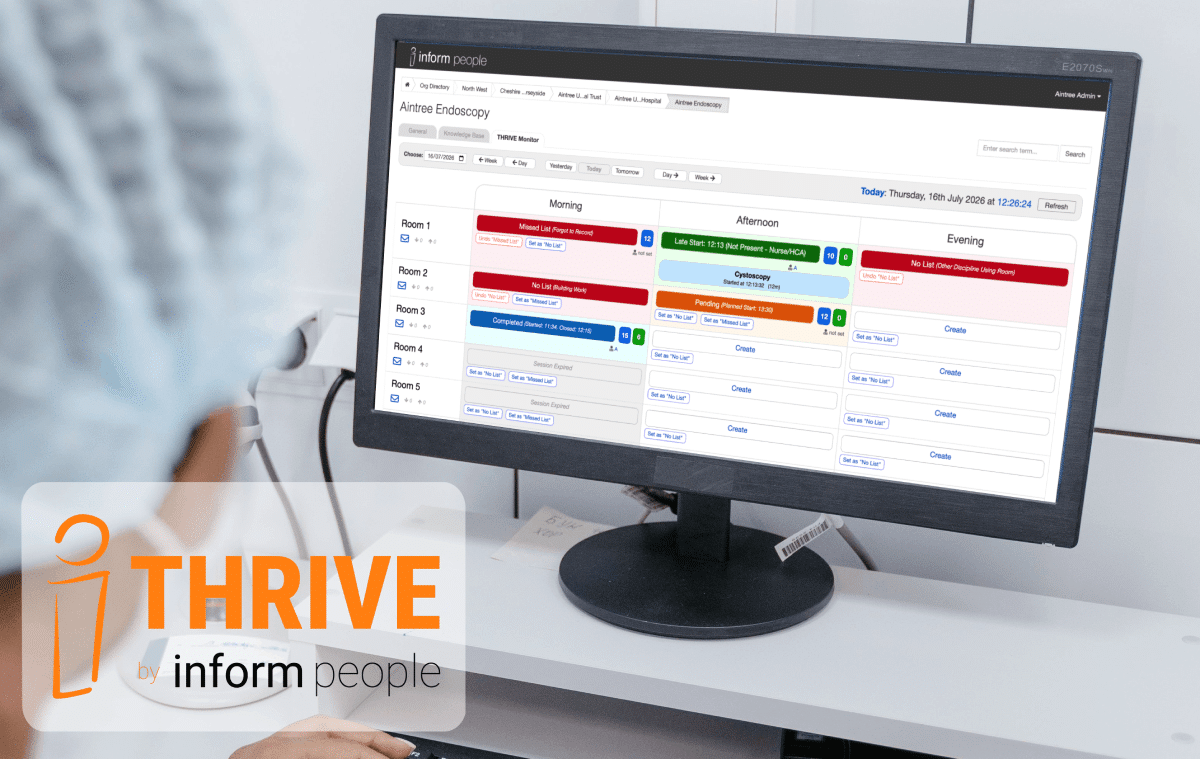
Your company will require a system that reflects your way of doing business, the hazards of your job, and how you manage employee safety and health. Our compliance and performance management software may assist you in the following ways:
- Create and maintain risk assessments following HSE guidelines.
- Add activities to help you maintain control measures and prevent possible workplace dangers.
- Set up task reminders, distribute duties to your staff, and maintain task records to ensure you follow health and safety requirements.
- Create and evaluate method statements, then urge your employees to approve them before beginning work.
- Inform People’s secure health and safety database software allow you to save all your rules and records in one place.
Manage your company’s system and data to generate clarity into the actions taken in your workplace. Inform People will provide you with the communication and compliance tools you need.