Risk assessments are a fundamental process that underpin effective and successful health and safety management. They identify any significant hazards present and highlight the control measures needed to prevent future workplace accidents and illness.
Employers are required to conduct risk assessments under the Management of Health and Safety at Work Regulations 1999. The results of risk assessments must also be communicated to all levels of the organisation. It can assist businesses of all sizes in ensuring a safe working environment and protecting employees from harm.
Why Are Risk Assessments So Important?
Risk assessments are important because they are a fundamental part of a health and safety management plan. Every workplace environment contains hazards that can result in injuries or illness. Wet floors, hazardous work equipment, exposure to dangerous substances, fire hazards, and other factors can all pose risks.
A properly undertaken risk assessment can significantly reduce those risks. They are structured procedures that ensure the health and safety of the whole organisation are appropriately eliminated, reduced, or controlled.
The main objective of doing risk assessments are:
- Raise awareness of potential hazards and risks.
- Determine who may be at risk
- Determine whether a specific threat requires a control programme.
- Determine whether current control measures are adequate or whether more should be done.
- Preventing injuries or illnesses is especially important during the design or planning stages.
- Determine the importance of hazards and control measures.
- Comply with all applicable legal requirements.
Risk assessments are at the centre of all effective health and safety policies. And this is because, when done correctly, risk assessments can assist businesses in transforming hazardous sites into safe workplaces.
Emergency Planning Saves Lives
Some hazards pose more significant dangers than only short-term injuries. They can result in fatal accidents and ongoing health conditions. Risk assessments can save lives by identifying these risks and outlining the implementation of control measures.
The risk of workplace fatalities can be kept to a minimum if not eliminated. Both employers and workers should be aware of the risk assessment findings and ensure safety measures are in place.
Protect People from Potential Harm and Ill-Health
The risk assessment process involves five steps, including identifying any hazards that could result in accidents, injuries, or illness. The level of risk and the chances of incidents occurring must also be assessed, and effective control measures must be implemented and monitored.
Risk assessments can significantly reduce the likelihood of workplace accidents and illness. They help employers identify ways to reduce health and safety risks by raising awareness about risks and hazards.
Avoid the Unnecessary Expenses of Poor Risk Management
Poor risk management can result in high costs that place a major financial strain on businesses. Employees who suffer work-related injuries or illness will need to take time off, and employers may be required to cover sick pay and the cost of employment insurance.
Legal fees may also be incurred, affected parties may seek compensation, and the Health and Safety Executive (HSE) may impose fines if companies violate health and safety legislation. These fines may also raise insurance premiums.
A thorough risk assessment and steps to reduce the assessed risks can help to avoid accidents and illness and the costs that come with them. A comprehensive and up-to-date risk assessment can also demonstrate HSE compliance, avoiding fines for poor health and safety.
Risk Assessments Reduce Your Company’s Legal Liability
When an incident occurs, the first question on everyone’s mind is, “who’s responsible?” If a company is found at fault due to poor health and safety procedures, it may face serious legal consequences and fines. The costs of these cases can run into tens of thousands of pounds.
Risk assessments not only reduce the likelihood of incidents occurring but also demonstrate to employees and external authorities, such as the HSE, that companies have taken adequate precautions to protect people and comply with legislation.
How Hazard Identification and Risk Assessment Will Help You
Hazards are anything in the business that has the possibility to cause harm. The first stage in a risk assessment process is identifying these workplace hazards.
This procedure aims to establish, implement, and maintain the ongoing identification of all hazards, risk assessments, and the development of necessary control measures.
Recognise and Control Hazards in Your Workplace
It is critical to assess the work environment for health and safety hazards in order to avoid injuries and illnesses. While there are numerous methods for identifying hazards in the workplace, the three listed below will assist you in developing effective Illness and Injury Prevention Programs.
- Conduct regular inspections of the worksite. Walk around the job site and visually inspect the equipment, work practices, and any potential hazards that could endanger workers.
- Interview employees and managers. This allows workers to express concerns that might not be as obvious if only worksite inspections were conducted. Involving employees in identifying hazards boosts employee morale and compliance with safety practices.
- Make a map of the hazards. Mark existing and potential hazards on a large outline of the work site. Involve workers in this activity to seek feedback and raise awareness of the importance of understanding workplace safety.
Create Awareness Among Your Employees and Use It as a Training Tool
Risk awareness is an important component of your organisation’s safety systems. You won’t be able to adequately prepare unless you have a thorough understanding of what threatens your business operations and employee safety.
Training is the key to raising your team’s risk awareness. You must provide numerous opportunities for your employees to learn about the dangers they face. Here’s how to present those opportunities in a safe environment.
- Hold regular safety meetings – Monthly or even weekly safety meetings will allow you to devote time to discuss your company’s risks and preparedness efforts. Themes or discussion topics can be used to focus the conversation on presentations of new risks or preparations.
- Increase safety communication – Send out a questionnaire to gather employee feedback on the effectiveness of your safety procedure. Regarding health and safety, workers and employees must be proactive, bringing issues to management’s attention rather than waiting for them to discover and implement changes.
- Train for situational awareness – Situational awareness in the workplace is equivalent to risk awareness in the workplace. Employees who have received situational awareness training will be much more aware of their surroundings. This is useful for detecting hazards and determining where safety can be improved to avoid hazards.
Set Risk Management Standards Based on Safe Practices and Legal Requirements
Identifying hazards and associated risks should serve as the foundation for developing a strategy for creating a safe workplace, safe practices, and ensuring personal safety. In general, the emphasis should be on developing management systems that will ensure that the strategies adopted to prevent accidents work.
It is critical that the approach is systematic and adheres to the general principles outlined in HSG65 Managing for Health and Safety. The guidance discusses the Plan, Do, Check, Act approach and demonstrates how it can assist you in striking a balance between the behavioural aspects of management and the system.
Reduce Incidents in the Workplace
Accidents are unexpected events that cause injuries, illness, death, and business losses. While there is no complete way to eliminate accidents, certain plans, preparations, and actions can be implemented to reduce their occurrence.
- Know the Hazards
- Create a Safe Work Area
- Use Safe Lifting Techniques
- Use of Personal Protective Equipment
- Regular Communication
- Education and Training
Save Costs by Being Proactive Instead of Reactive
Though you cannot plan for every single problem in advance, planning for potential problems will help you save time, money, and effort that you can use to deal with unexpected troubles. Implementing proactive safety protocols reduces the likelihood of an accident occurring in the first place and makes dealing with an incident much more manageable.
Being proactive involves anticipating accidents, being prepared, minimising response times, lowering the number of workplace injuries, and, as a result, lowering the number of worker’s compensation claims.
Reactive safety measures, on the other hand, are essentially the opposite. Saving money is one of the perceived benefits of using this method. On the other hand, the direct and indirect costs of workplace injury are significant. It’s not worth the risk of unexpected expenses that could harm your company’s long-term profits.
How Can Inform People Help You Create an Effective Risk Assessment?
The consideration of safety should not end with completing a risk assessment. Implementing safety practices allows employees to be highly aware and conscious of their safety while performing their best work. Your organisation can benefit from hazard identification and risk assessment training.
Good and effective risk assessment training should familiarise new and existing employees with the hazards and risks they may face. It should also be capable of guiding them through safety procedures.
When everyone is on the same page, risk management becomes simple. Compliance and performance management software from Inform People allows you to keep everything in one place. With a few taps, organisations can track hazards, risks, control measures, and corrective actions.
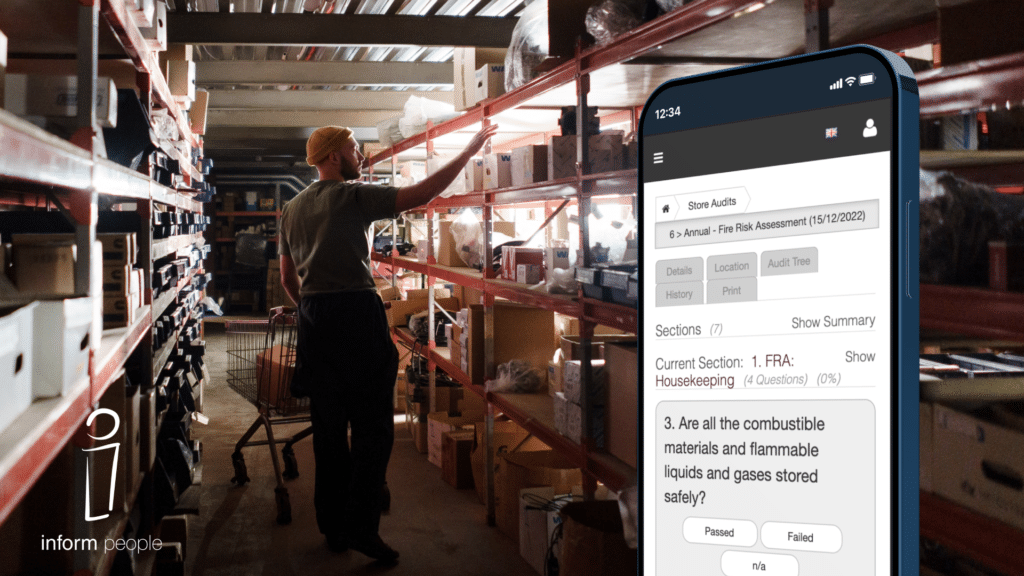
- Digital risk assessment templates that your organisation can access on their mobile devices to centralise your risk assessment process.
- Customise operational risk policies to meet the company’s needs for more accurate risk assessment and analysis.
- Provide a virtual risk assessment training programme to your employees and assist in understanding the basic processes involved in making the workplace legally compliant.
- After completing the risk assessment forms, comprehensive reports are generated automatically. They can be distributed in word, pdf, or via a link throughout your organisation.
Contact us today. Inform People’s compliance and performance management software will help streamline any audit or risk assessment you require onsite or globally.