As the weeks go on, the picture of how the UK will coexist with the coronavirus is becoming clearer. We now have confirmation of how certain industries will reopen and people are tentatively testing the waters as they venture into the world once more after months of isolation.
But the new way of living will be a far cry from how it once was. Everywhere has some restrictions on how you interact with staff or how close you can be to other people. For some time, it’s going to be alien. Things won’t be the same. And that might be true for the NHS more than anyone else.
The NHS has had their hands full with COVID-19 for some time now (and will continue to) but the question becomes how do normal situations happen alongside this? The answer, unfortunately, might be “with great difficulty”. But we feel there is room for optimism and, with preparation, the NHS can adjust to the challenge with relative ease.
The state of affairs
Current health and safety restrictions around cleaning public spaces are going to prove a problem for healthcare services. It’s already a sector that requires stringent cleaning regimes and the coronavirus is getting in the way of that.
The time it takes for droplets to settle in a room is an hour and three quarters, depending on how well-ventilated it is. That means cleaning can’t begin until after this period, so you can be sure all traces of the virus have been removed. It slows down the entire process, meaning rooms can’t be used as much as they once were.
It’s led some people to speculate hospitals might only be capable of providing 20% of their usual activity. And that’s a potential maximum and when using private facilities. Public spaces, such as waiting rooms, are a challenge of their own.
This could be the status quo for months to come. It means people who need urgent attention, potentially to check for signs of cancer, face huge wait times which could lead to premature deaths. It’s something endoscopy departments have talked candidly about and is most likely an issue for many departments. So how can the NHS make the most of a difficult situation?
The potential solution
The key to managing these difficulties will be planning. More so than before. It requires rigid, scheduled planning that lays out the rooms you have, when they’re free, when they’re to be vacant, and when they need cleaning. Then, on top of that, you need everyone to know all this information at all times.
Think of it like a military operation; it needs to be regimented and followed by-the-book. You can’t risk spreading the infection or leaving a room in an unfit state, which is why cleaning at the right time is so necessary.
It also needs to be simple. Not necessarily the plan itself, but how it is communicated to staff. The roles everyone needs to play should be front and centre. And when they report they’ve done their part of the job, they need to be capable of noting it down as quickly, efficiently, and as straightforward as possible.
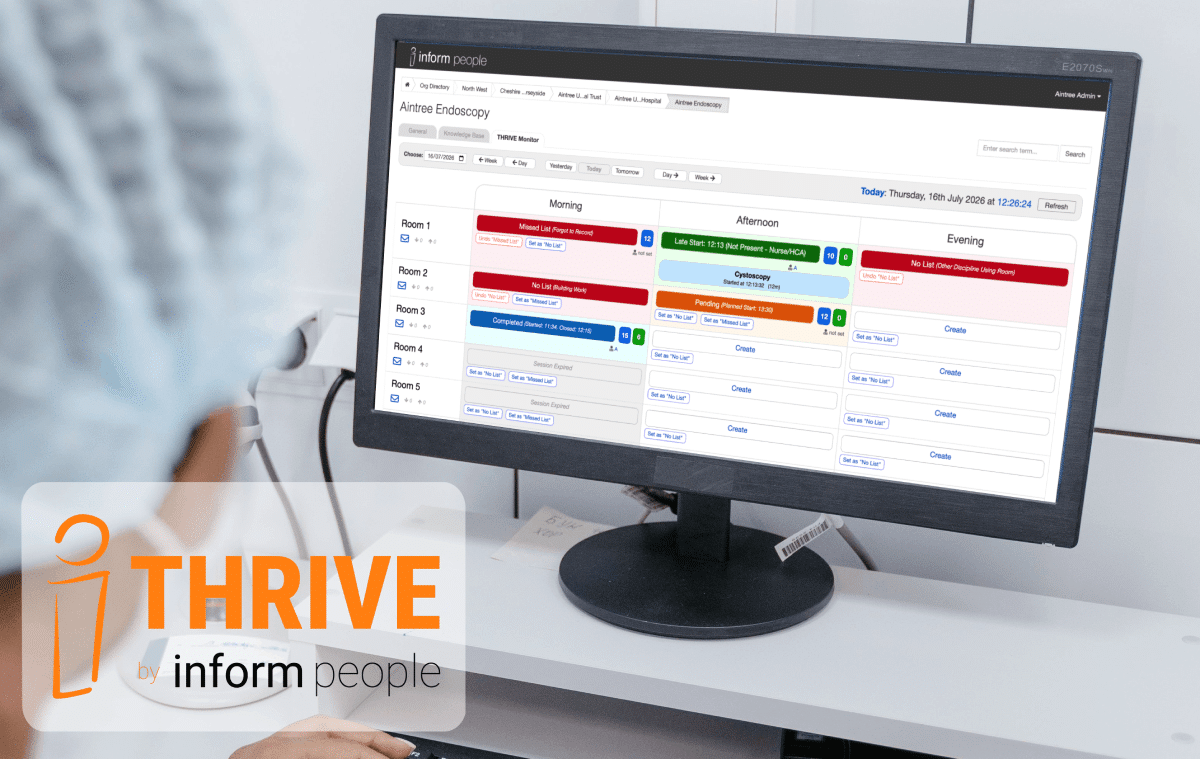
There can be no room for error or misunderstanding. With THRIVE, that’s exactly what we’ve accomplished. It’s a way to stay compliant with your own regulations while also reducing the burden on your doctors, nurses, and cleaners. Before they step foot in a room, they can see if it’s been cleaned. It also gives them the freedom to respond to changes throughout the day and let people know about them.
It’s clear, it’s convenient, and it makes tackling the next few months that much easier. We won’t be able to return to how it once was, but at least we can prioritise patient safety and see to as many urgent cases as possible.
THRIVE was created as a complete solution for the NHS. We want all NHS staff and patients to feel confident in the fact their work is organised and safe. If you would like to discuss your needs, get in touch with the team via email.